I deserve a rejection

Don’t leave me hanging

When I decided to make ceramics full-time and quickly found myself overwhelmed and directionless, I realized I needed a more granular plan than “make pottery → be successful.” So, at the start of every year, I wrote down three to five tangible, achievable goals ranging in complexity from something I knew I could do, to something that was quite a stretch. In my first year, this was the list:

Get 10 rejections
Get into 1 show
Publish an article

Gamifying rejection as an incentive to put my work out there went surprisingly well, and I began applying to shows and acquainting myself with the slow-burning angst of waiting for an answer. That was the chafing little grain of sand around which this here pearl of wisdom at last formed.

Because, you see, getting rejections was harder than I imagined. I'm not talking about being rejected, that was easy peasy. I mean actually receiving the rejection: the news, the update, the answer, the no. Unless my work was accepted, I often didn't hear back at all, and pieced together the outcome from public evidence: a gallery's instagram post congratulating the selected artists, someone celebrating their own acceptance, or simply the opening date passing. Eventually, I started emailing the organizers to ask for updates. Some didn't even reply to that. The more it happened, the more it grated on me.

I estimate the average application fee for a show or residency call to be around $30. In my first year, were I the budgeting type then, I would have had to earmark at least $300 for that. It’s not nothing, but this is not a rant against submission fees. Apart from the substantial expense of organizing and running shows, residencies, and other selection-based programs, the call and review process is, in and of itself, costly—time, labor, coordination, overhead, compensating curators and invited jurors, etc. If submission fees are a stream of revenue, by necessity or by choice, great. Make it work. Make a profit! I'm happy you're creating this opportunity for me. (It’s worth noting that there are people whose entire business model is collecting submission fees, and on the opposite end of the spectrum, there are organizers offering sliding scale fees, or waiving them altogether. My point still applies.)

Now that we've acknowledged money and the business aspect, let's be honest about what that means. The human connection and the spirit of the clay community nurture my soul, truly, but until I can pay for my application with vibes, the call/submission exchange is a transaction, not a favor. Setting aside the larger context of the opportunity, a call is an offer to have my work considered. What I am paying for with my submission is not the acceptance—I am paying for the evaluation. The decision is the deliverable, and a no is as much a part of it as a yes.

It's not unreasonable to expect that all applicants be contacted at the end of the selection process. This should be built into the plan. I know you have my email, and it's probably already in a spreadsheet. There are plenty of ways to automate a simple notification, and if all else fails, copy-and-paste should do.

This is a cynical take, I realize. A tad severe. It is also about professionalism and mutual respect, and about affirming that my effort and my money are not just incidental.

In lieu of a notification, I'll accept a refund.

Considering Residencies

And freezing in Montana

When it's -20ºC (-4ºF) outside and that's not even the coldest it's been, it's difficult to start any conversation without commenting on the weather. It's cold. When I complain to my husband—because I had to dig the car out from under the snow again, because I went outside without gloves for a second and can't move my fingers, because the road is a sheet of ice—his reply is: you live in Montana now, you realize?

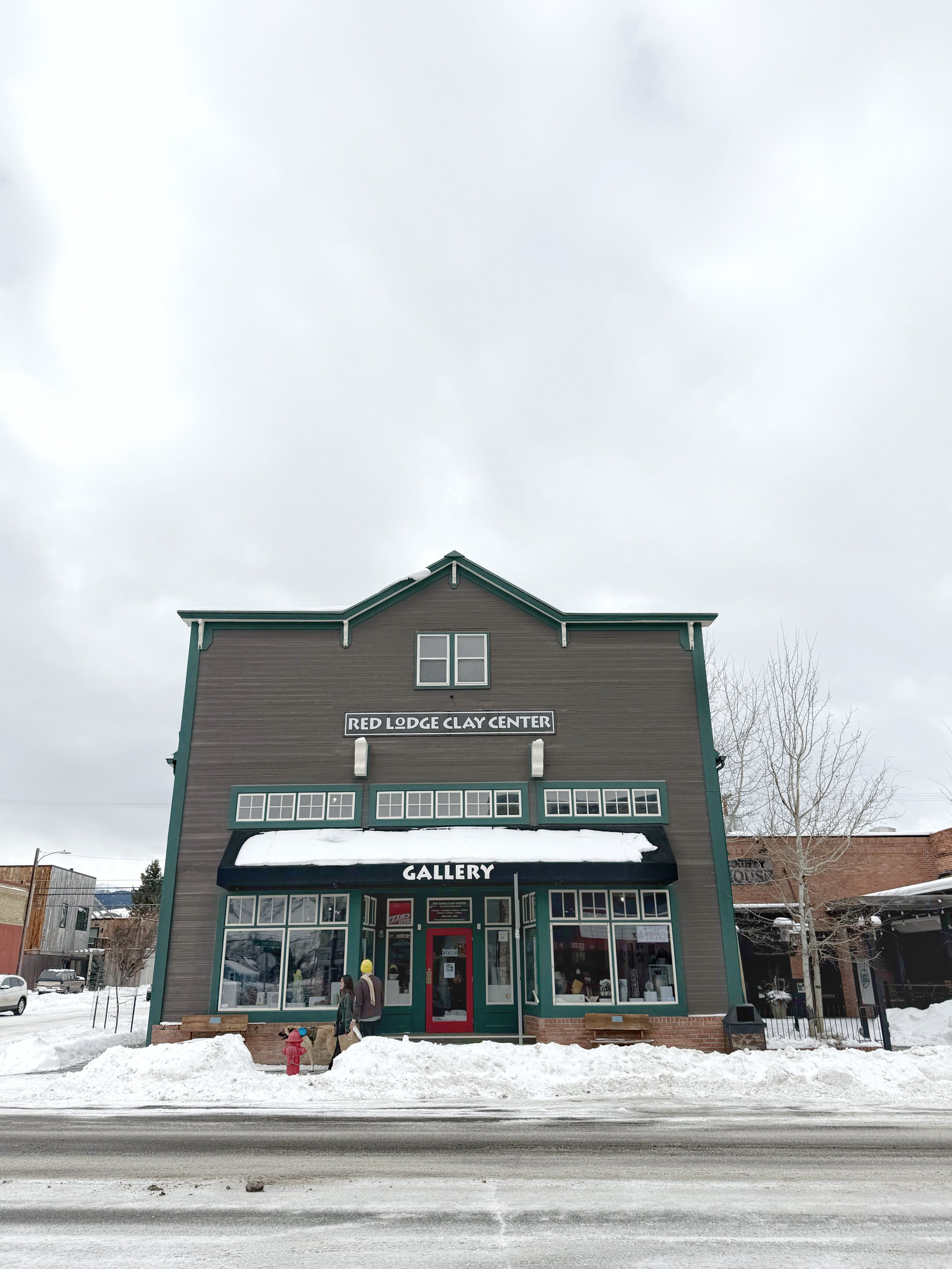
I kind of live in Montana. I'm here for two months, the two coldest months, doing a residency at Red Lodge. I work in a large and comfortably warm studio with four other short-term residents, and would be sharing a house with them if I hadn't bailed last minute for an airbnb. It's our third week together. So far, so good.

This is my third two-month residency, and apart from the first one, there were other residents with me. It's a delicate thing, sharing your work space, especially for introverts and the attention-challenged—which I am, both. But when the group is good, the atmosphere in a shared studio is incredibly conducive to focus and productivity. This group is good. I don’t have any experience being in a group that doesn’t work, but I’ve heard stories and it sucks. Buyer beware, I guess.

The view from Joe's studio

Why do a short-term residency? For me, to have more space and access to wood firing. I know some people do it to refine a body of work for their portfolio, or they have a commitment coming up—a show, a market—and need to make work specifically for that. It’s also good for your résumé, if that’s important to you. The place’s vibe and its reputation matter. Research, check the list of past residents, talk to them.

Here’s what catches me by surprise, every time: I actually love interacting with the other residents. Human connection is not something I normally crave—if anything, I need to get away from it to recharge. But how absolutely awesome to learn about other people’s work and their process, talk about clay every day for weeks and weeks, and get thoughtful feedback when you hit a snag.

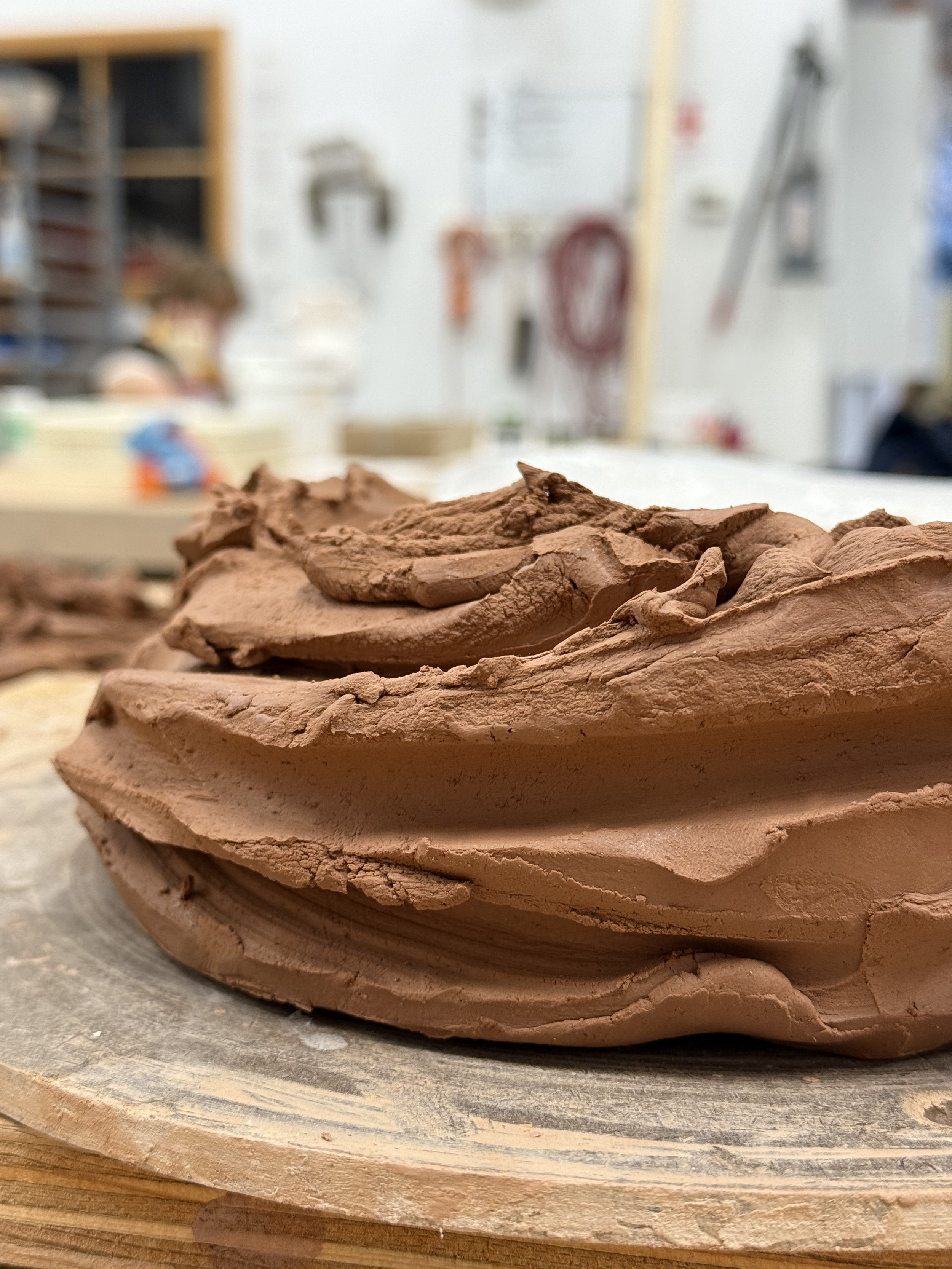
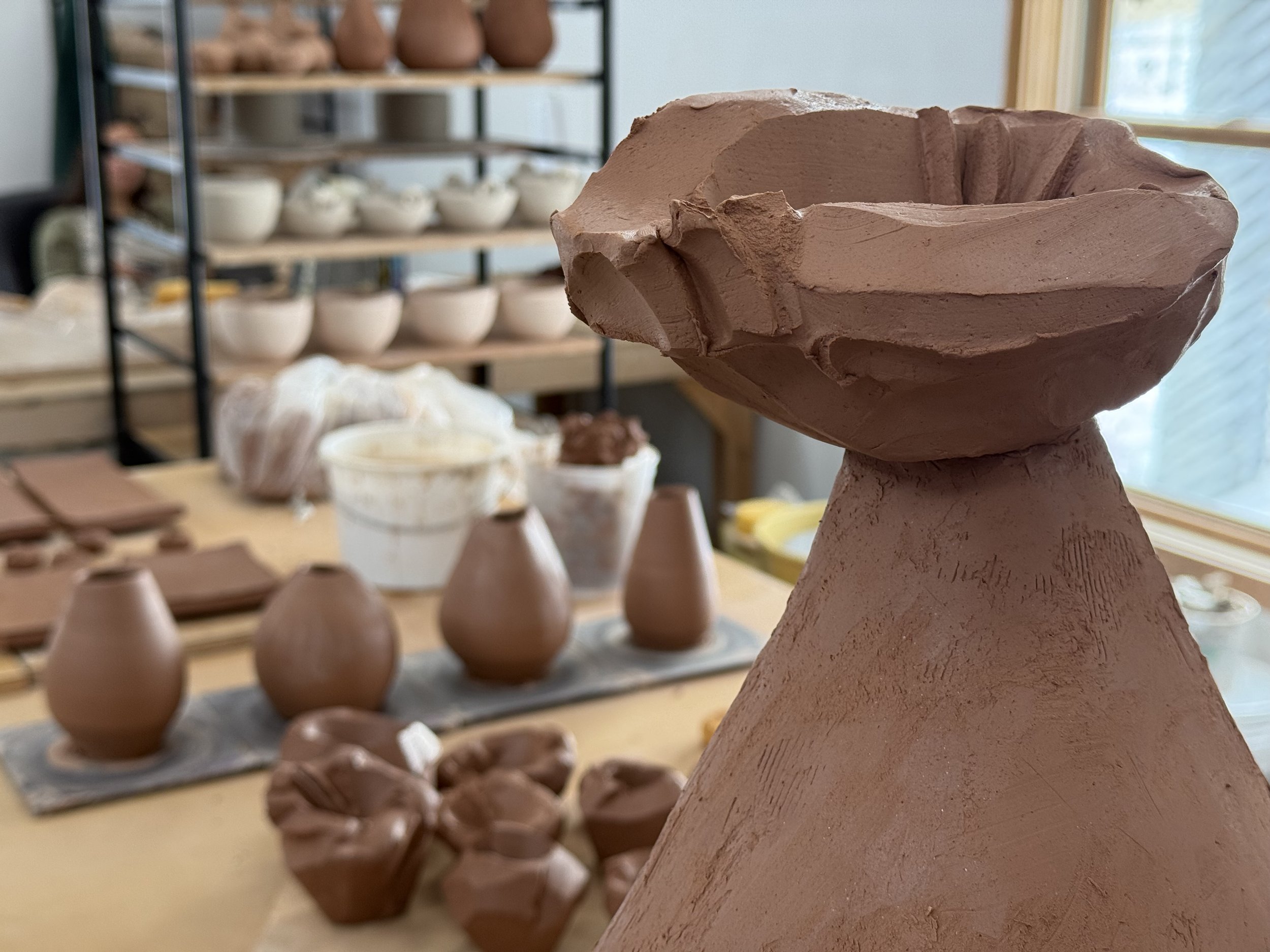
Still not tired of making chunky bowls

Right now, in Red Lodge, the pace is picking up and the kilns are being fired. We follow each others’ projects, share knowledge, and commiserate about the cold—we may have in common nightmares about exploding greenware, but the real struggle that unites us is the icy turn down the county road. Play hard, drive slow.


Meet my fellow residents:
From Starworks, Elena and Victor (I wrote about Starworks here)
From Red Lodge, Jessika, Joe, Olivia, and Coral.


I'm in Star, North Carolina, and this is how it's going.


I'm halfway through my 2-month artist residency at STARworks in North Carolina. The building is an old sock factory, and very, very big—other than the clay studio with several private spaces and gas and wood kilns, it houses a glass blowing hot shop, a metals shop, a clay factory, a ceramics supply shop with two beagles (Nina Simone & Molly Malone), a beautiful gallery, a café, and multiple art installations and event spaces. There is so much art. You crack open big doors, look behind curtains, wander into dark rooms, and keep finding art. It's a special place.

The director of the ceramics department is Takuro Shibata, whose superpower is to give residents carte blanche while being fully present. The interns and staff are delightful. The vibes are good.

We fired the noborigama a couple of weeks ago, under the auspices of the Aurora Borealis—see post by Ryan. It was an easy firing and the results were good, if a little different from my usual. I used glazes, for one, and a few local clays (for which the area is famous and because of which STARworks exists), and that's what art residencies are for. Experiment. Take a detour. Fight a battle.

Firings and residencies continue to show me that it matters to have hard working, sensible, talented people in the studio and around the kiln. The setting makes a difference, and the people make the setting. It's good here in Star, NC.

Also, we saw a comet.